A Family Man On The Rise
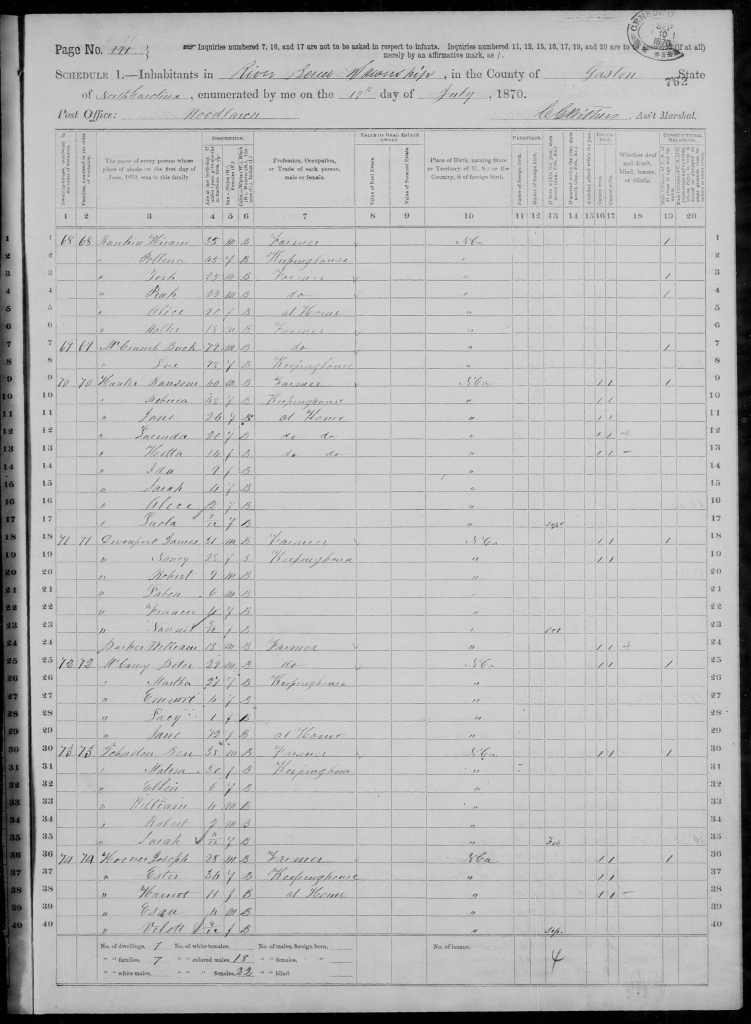
The Census Snapshot: In 1870, census takers found 40-year-old Ransom Hunter in River Bend Township, Gaston County, North Carolina – not yet the successful businessman he would become, but already showing the foundation of his future success.
A House Full of Daughters: Ransom shared his home with wife Rebecca (McCrorie), eight years his senior, and an impressive seven daughters ranging from newborn Luola to 24-year-old Jane. The Hunter household was bustling with life – Jane, Lucinda, Hetta, Ida, Sarah, Alice, and baby Luola all called this North Carolina home their own.
Deep Carolina Roots: Every member of the Hunter family was born in North Carolina, showing this wasn’t a family of recent arrivals but people with deep ties to the land. At 40, Ransom was entering his prime years – old enough to have wisdom and experience, young enough to build an empire.
What This Moment Reveals: This census captures Ransom at a pivotal point. The Civil War had ended just five years earlier, Reconstruction was reshaping the South, and a 40-year-old man was about to prove what was possible in a changing America. The large, stable household suggests someone already demonstrating the leadership and responsibility that would soon make him a prominent landowner and businessman.
What Other Documents Reveal: However, Ransom’s 1900 census record shows his birth date as January 1835, making him actually 35 in 1870, not 40. This age correction creates a significant problem with the family relationships shown in the 1870 census. If Ransom was truly born in 1835, he would have been only 11 years old when 24-year-old Jane was born, making it impossible for her to be his biological daughter.
His 1890 marriage certificate to Maggie Wells lists his parents as Mike Johnson and Judie Hunter, explaining why he took the Hunter surname from his mother’s side rather than his father’s Johnson name. The certificate also confirms his age discrepancies – listing him as 52 in 1890, which aligns with an 1838 birth year rather than 1835.
This evidence suggests the 1870 household likely consisted of Ransom caring for Rebecca (possibly a widow) and her children from previous relationships, rather than his own biological family.
The 1870 census presents what appeared to be a traditional family structure, but other documents reveal a more complex arrangement typical of Reconstruction-era households where young men often took responsibility for extended family or community members in need.
 Ransom Hunter Foundation